Experience & Discover
Plan & book
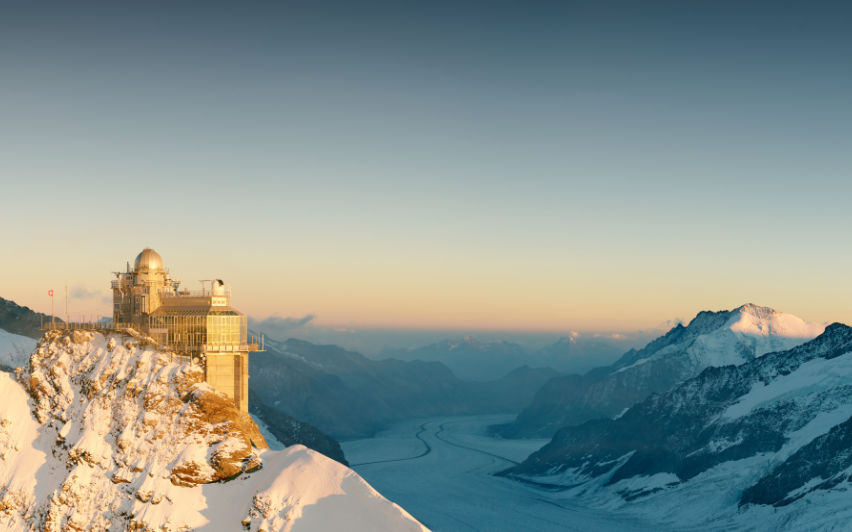
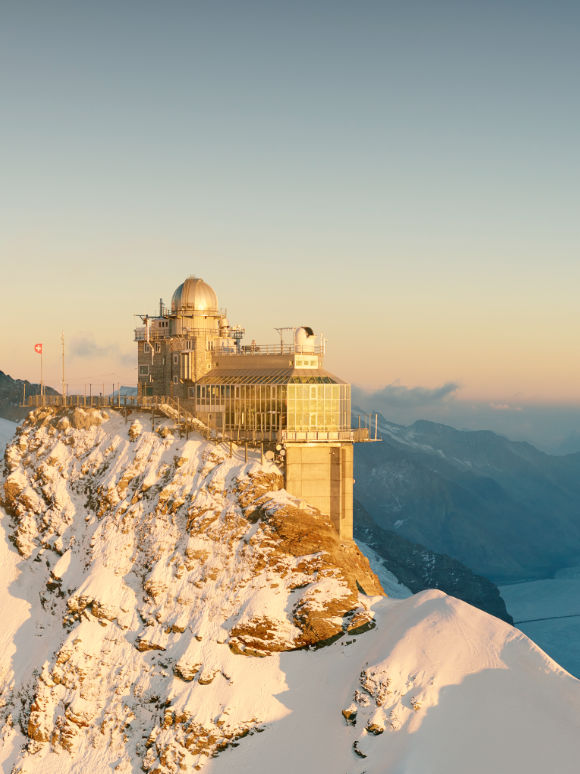



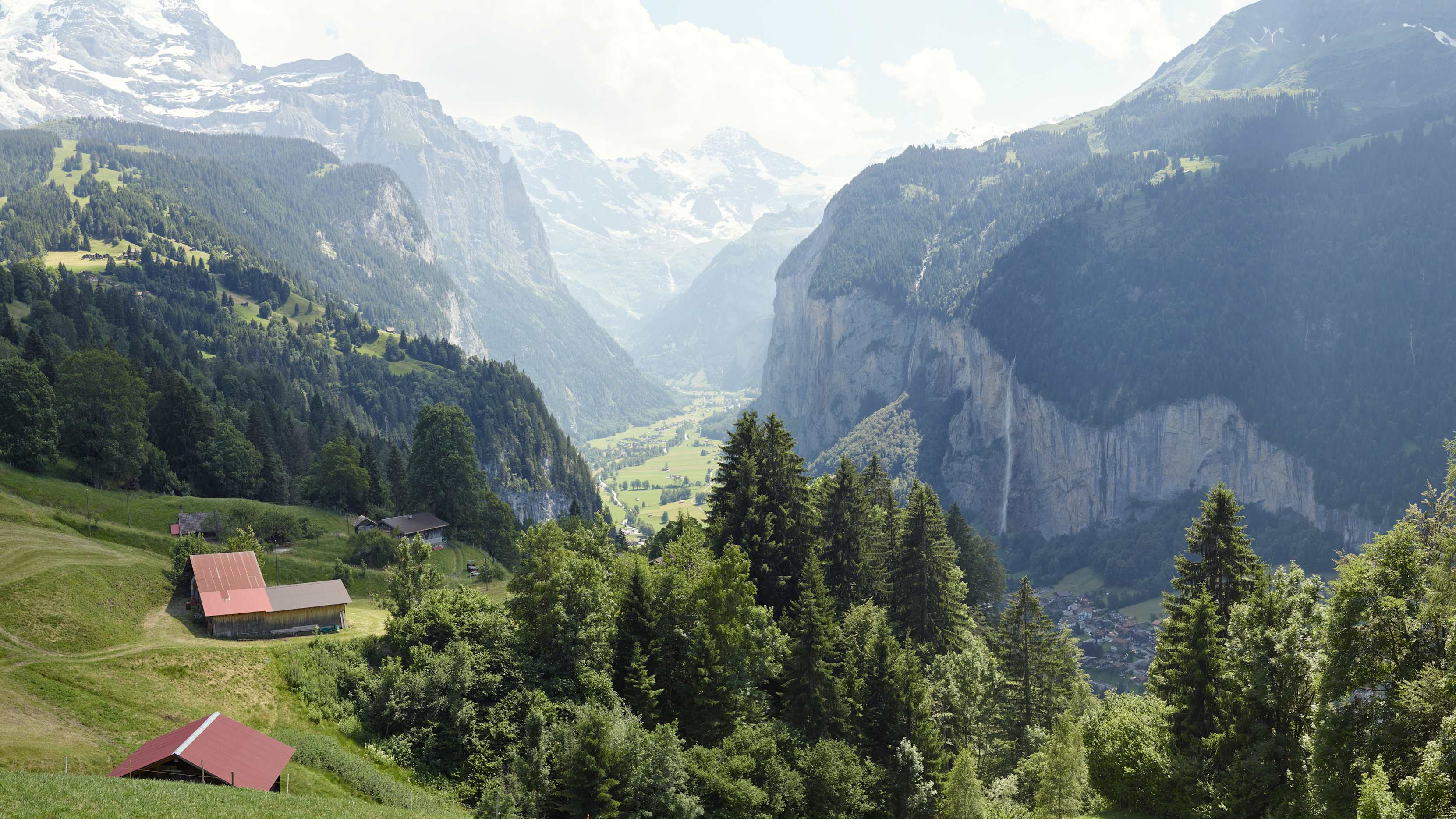
Vertical rock faces and delightful terraces, framed by snow mountains: the Lauterbrunnen valley fascinates mountain enthusiasts and extreme sports fans alike, as well as those who simply enjoy life. Glaciers have shaped this scenery in thousands of years.
It's cold. Freezing cold. Even if the sun is shining. Ice covers the mountainous landscape and the V-shaped notches that streams have previously dug into the rock. Even where today the Lauterbrunnen Valley with the sun terraces of Wengen and Mürren is situated. Only the highest peaks rise out of the ice. We are in the Bernese Oberland 25,000 years ago.
It's the ice age. Everything is frozen. Nothing seems to move. But appearances are deceptive. Under their enormous weight the ice masses, which are up to over 1000 meters thick, are moving on the slopes of the Jungfraumassiv. Its pressure heats the glacier bottom so that the ice begins to glide on the melting water. The glaciers move between 20 and 200 meters per year. And they transport huge amounts of rubble - from small pebbles to huge boulders that can still be seen in the landscape today.
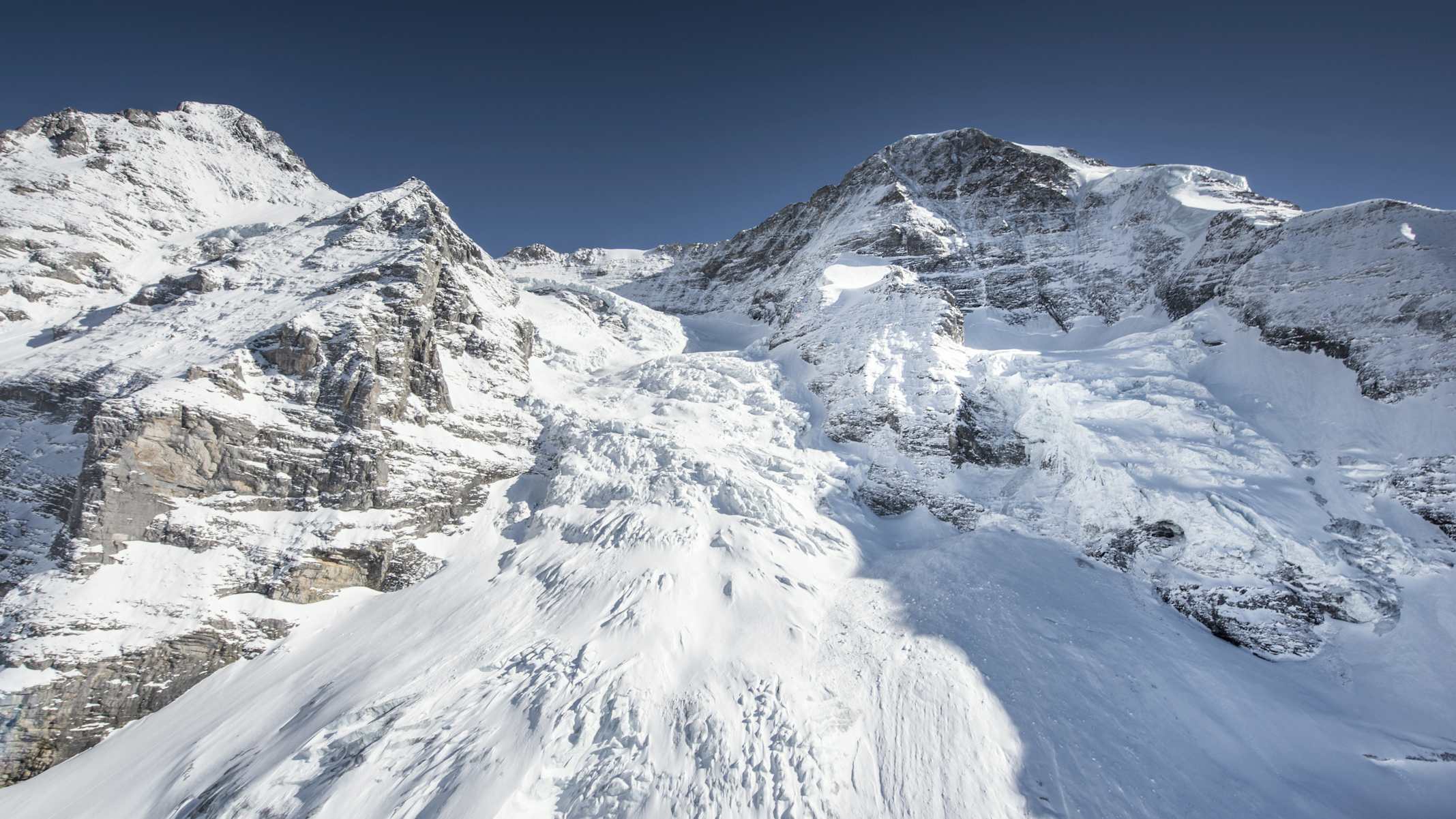
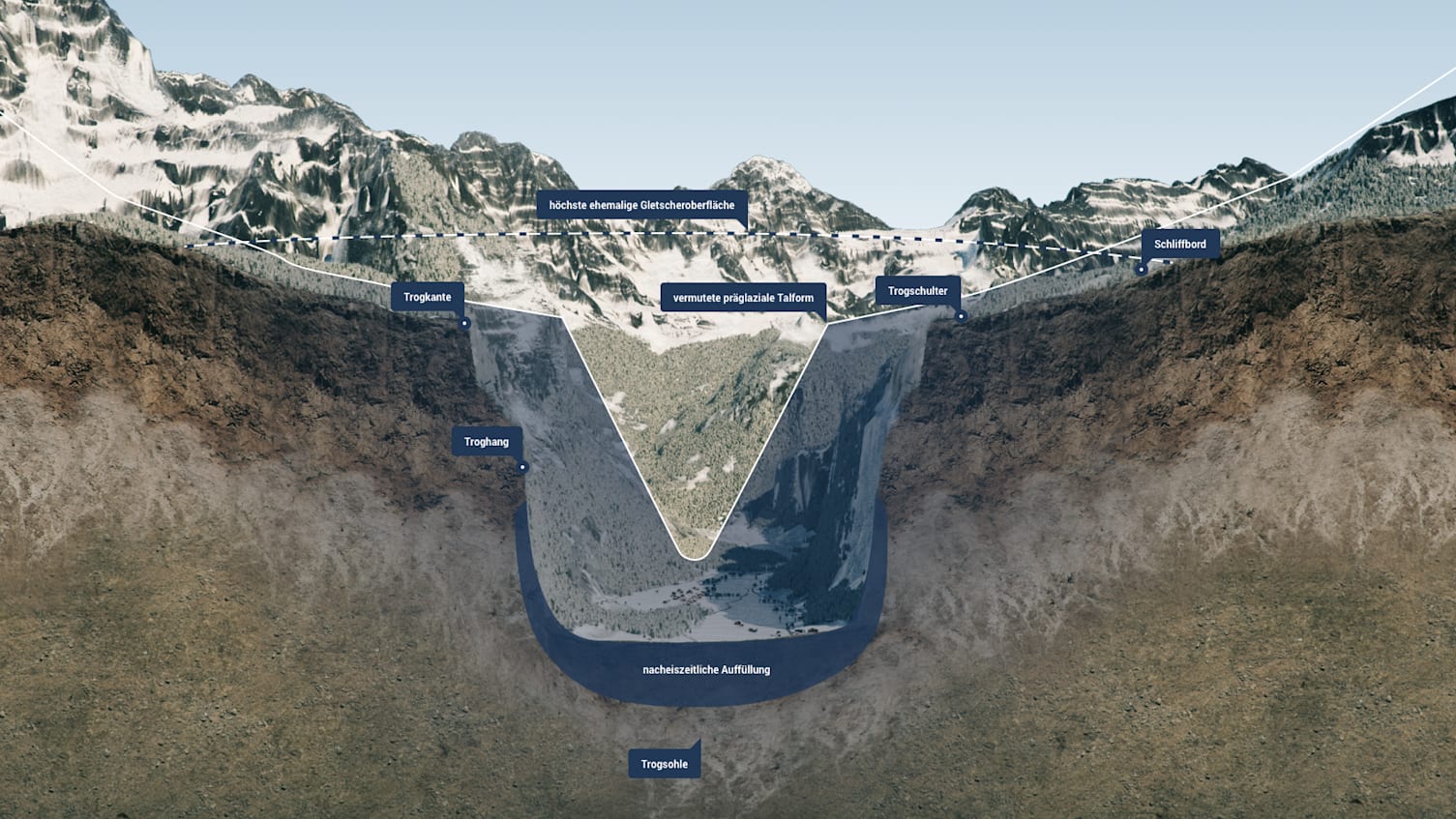
Gravel sticks at the bottom of the ice rivers, which acts like oversized sandpaper. The glaciers, which weigh millions of tonnes, scrape rock away from the ground and the flanks. It is a permanent rubbing, pushing, sanding and scraping. It is a powerful force which forces the V-shaped valley slowly to a new shape. Very slow, but all the more sustainable.
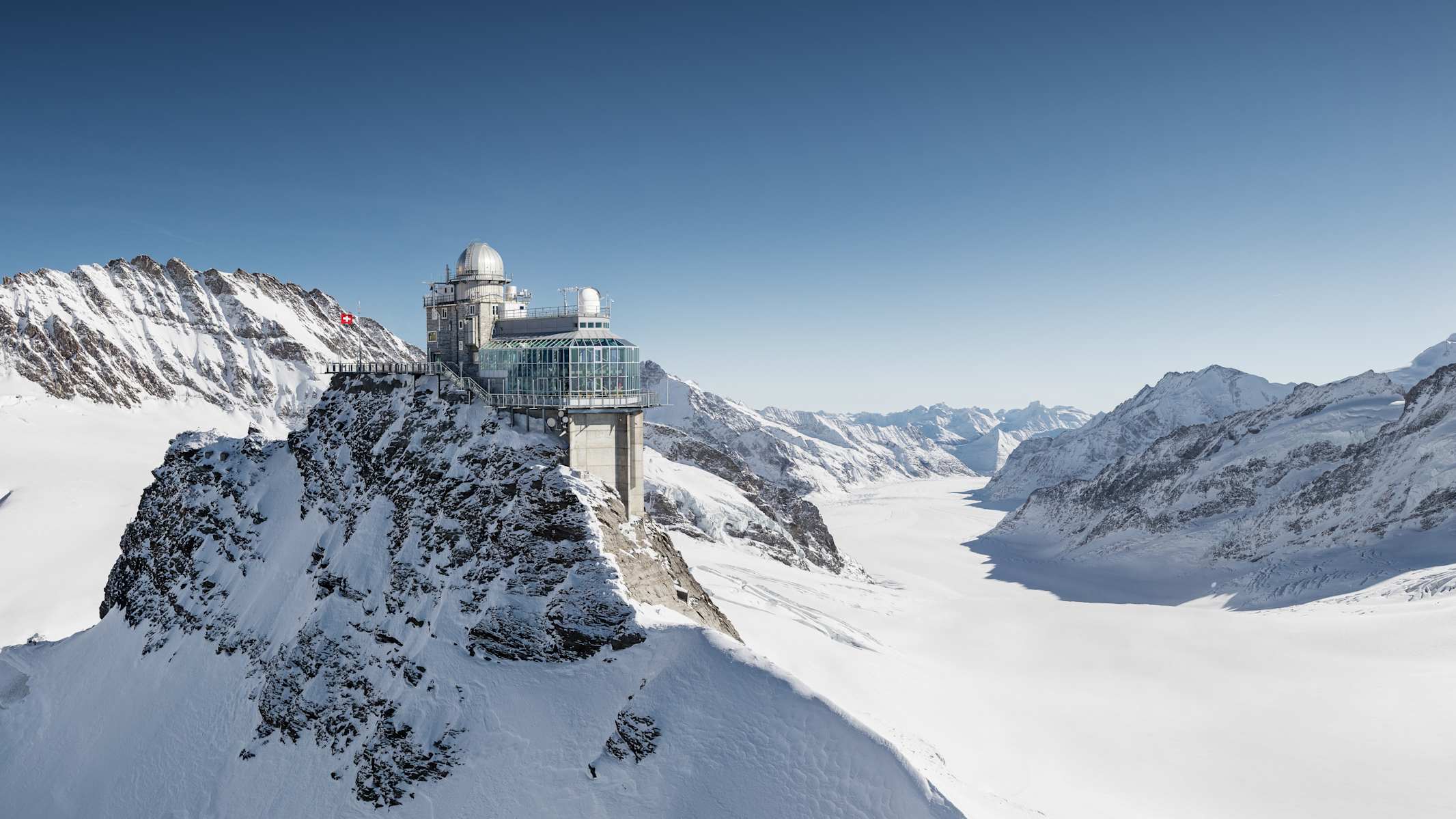
The glacier, which flows downwards from the Jungfrau, appears particularly imposing, especially in its center. Its enormous weight properly mills a wide nut into the landscape. Vertical, several hundred-meter-high rock walls bound a flat valley floor on both sides. The V-shape becomes a U-shape, the «Kerbtal» becomes a «Trogtal».
The force of the ice stream at its edges is significantly lower. There are terrasse-like, gently inclined plateaus, so-called «Trogschultern», and often also «Hohlkehlen», which mark the peak of the glacier. From there, the mountains rise steeply again.
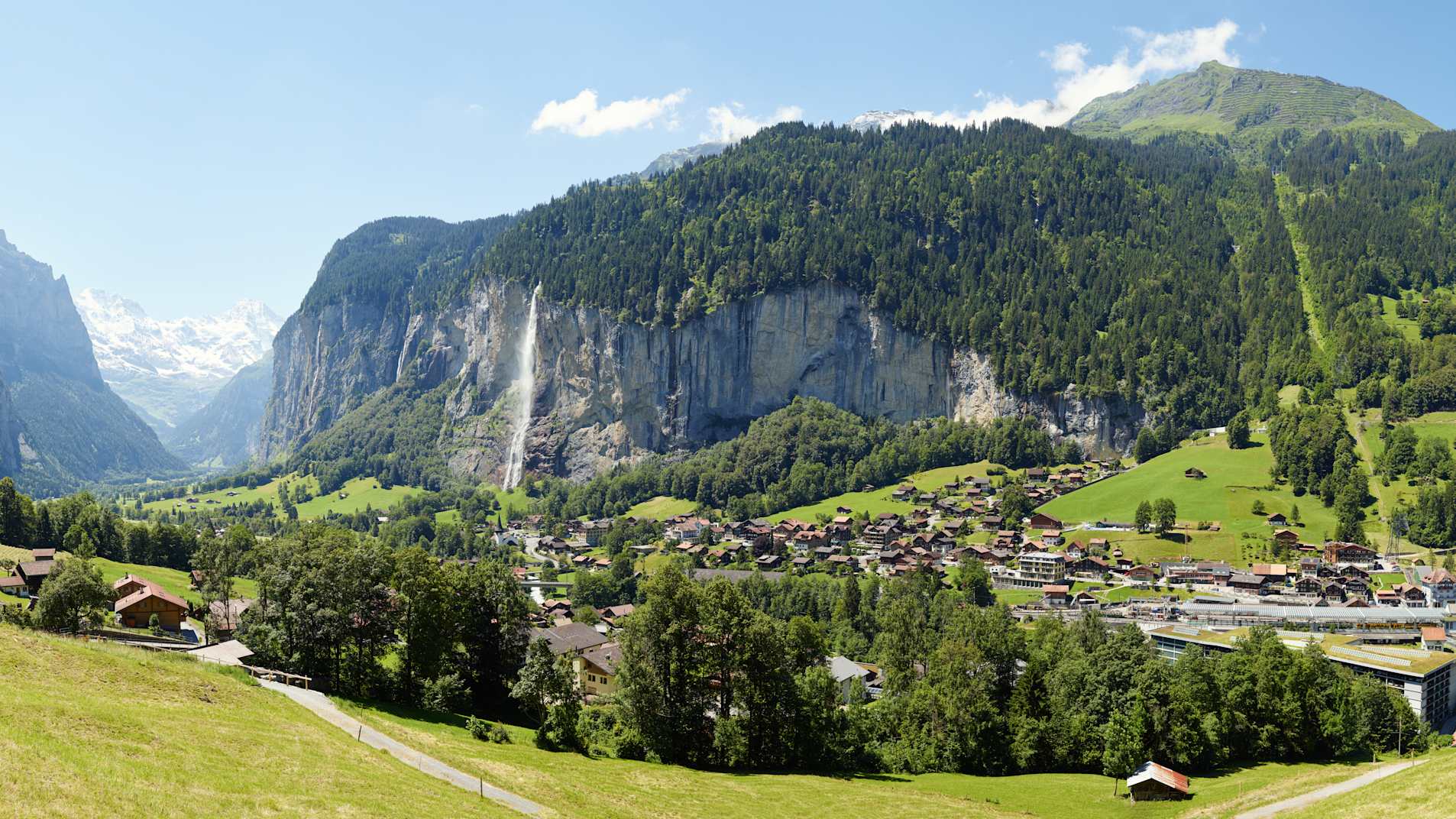
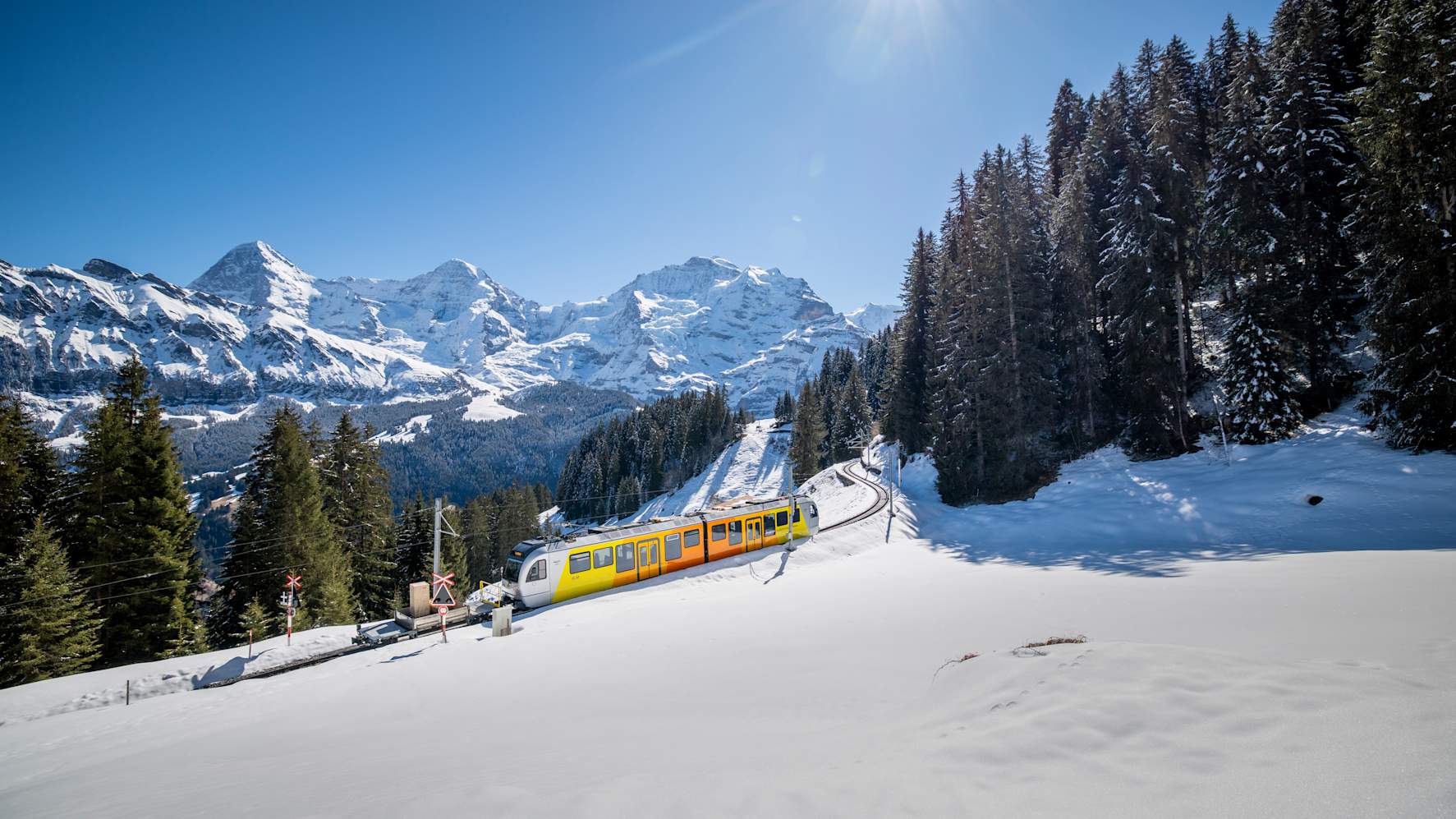
Since the last Ice Age, the ice masses have melted, leaving behind a landscape that made life possible and which is so rare in Europe. This has been discovered by tourists from all over the world.
Strollers take the easy paths around Mürren and Wengen. Hikers wander through forests and over-flowered Alps. Mountaineers dare to climb steeper passages. Winter sports enthusiasts swing on slopes and down the snowy hills. Basejumper and Wingsuiter plunge from the troughs into the Lauterbrunnen valley. And quiet gourmets simply sit down on a bench.
Common to all people is the enthusiasm for one of the most beautiful valleys in the Alps with its 72 waterfalls. It is also a succession of the valley-forming glaciers of the last Ice Age.