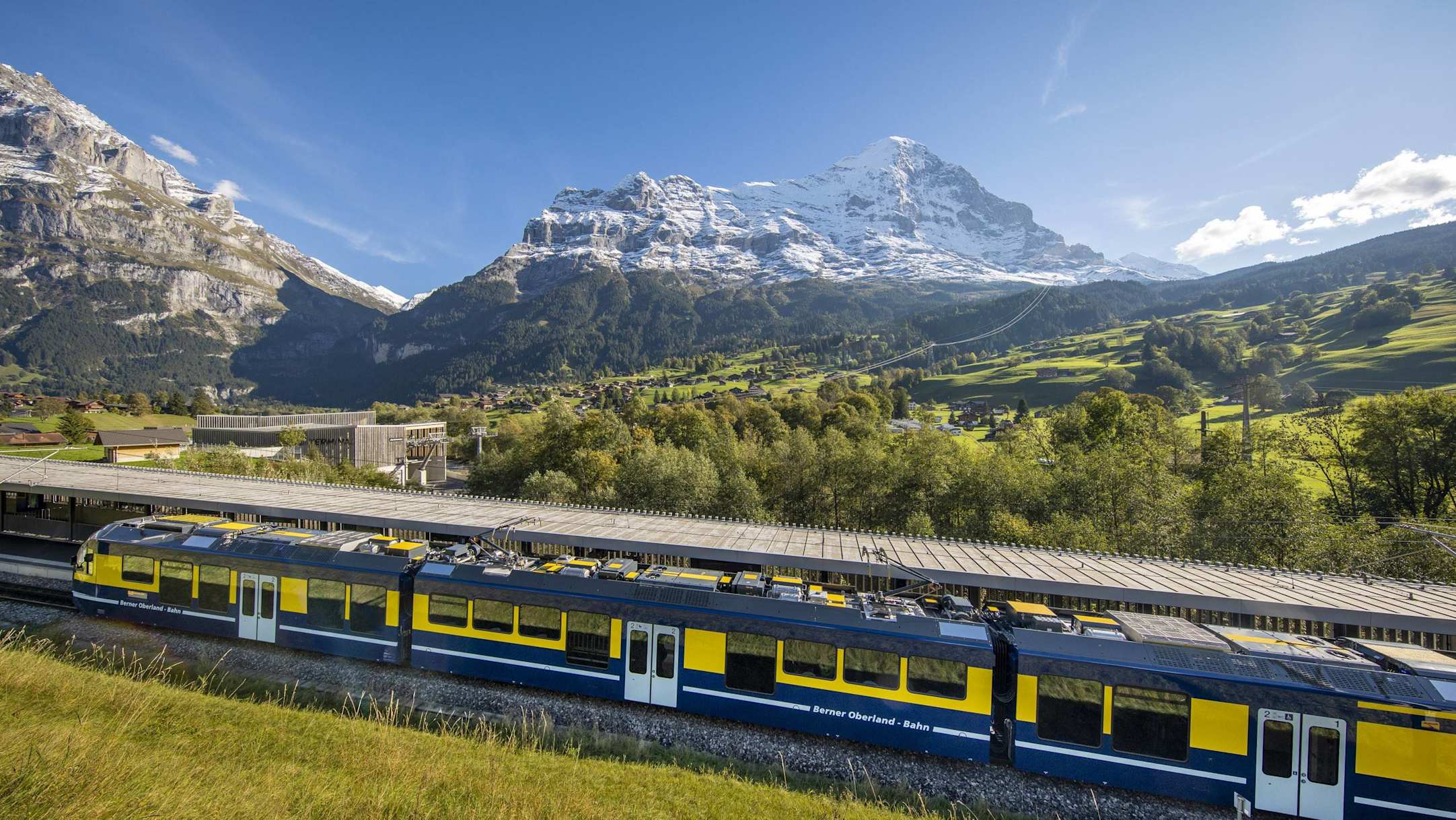
The Berner Oberland-Bahnen AG (BOB AG) recorded its highest ever transport revenue in the 2025 financial year. With 30.9 million Swiss francs, it was again 1.3 million francs higher than in 2024.
The BOB increased its passenger numbers to 7.2 million last year. The figure for 2024 was thus exceeded by 0.9 per cent. The transport revenue was 26.7 million Swiss francs, and, thanks to higher season ticket revenue, was 5.4 per cent higher than in 2024.
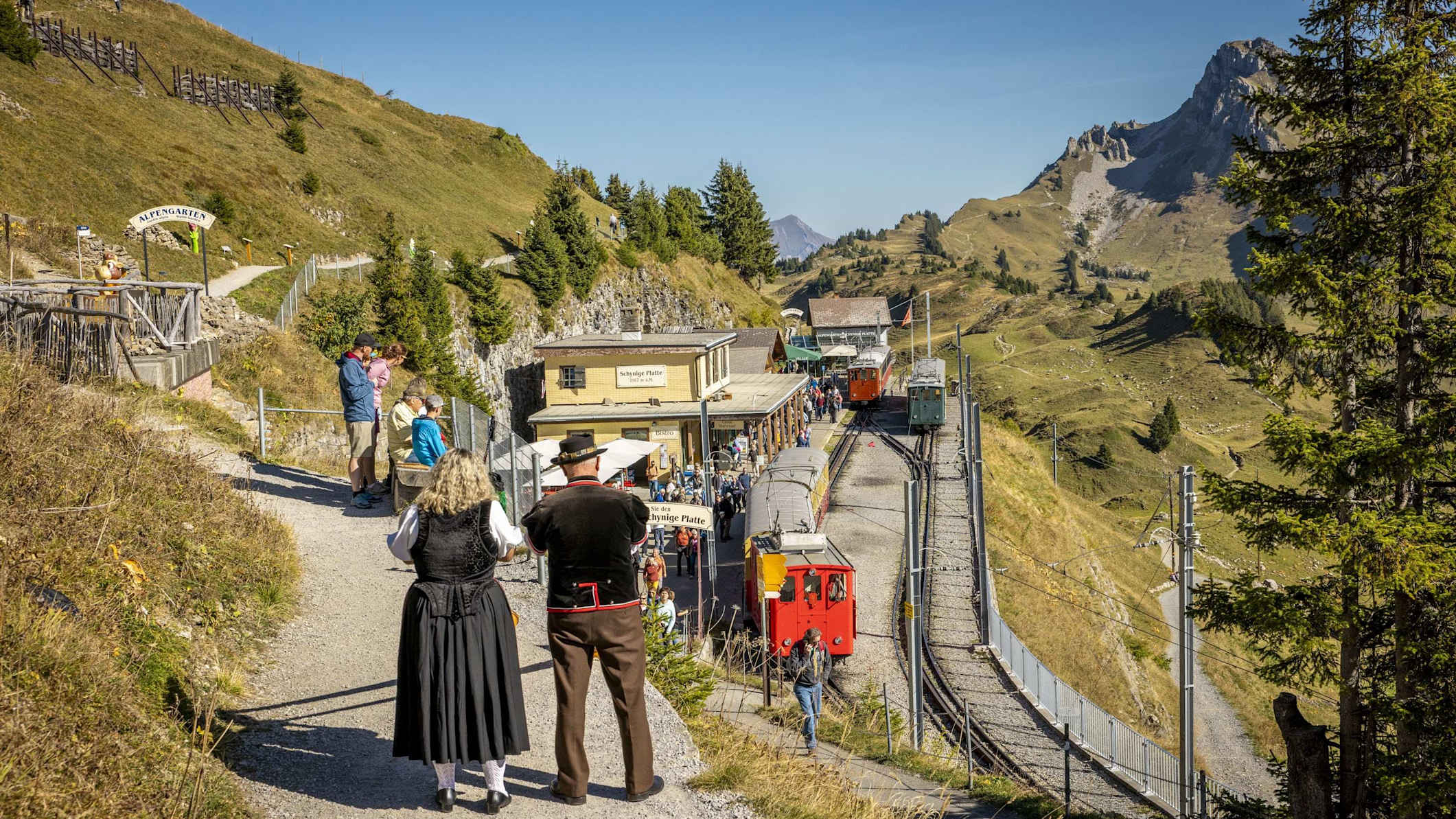
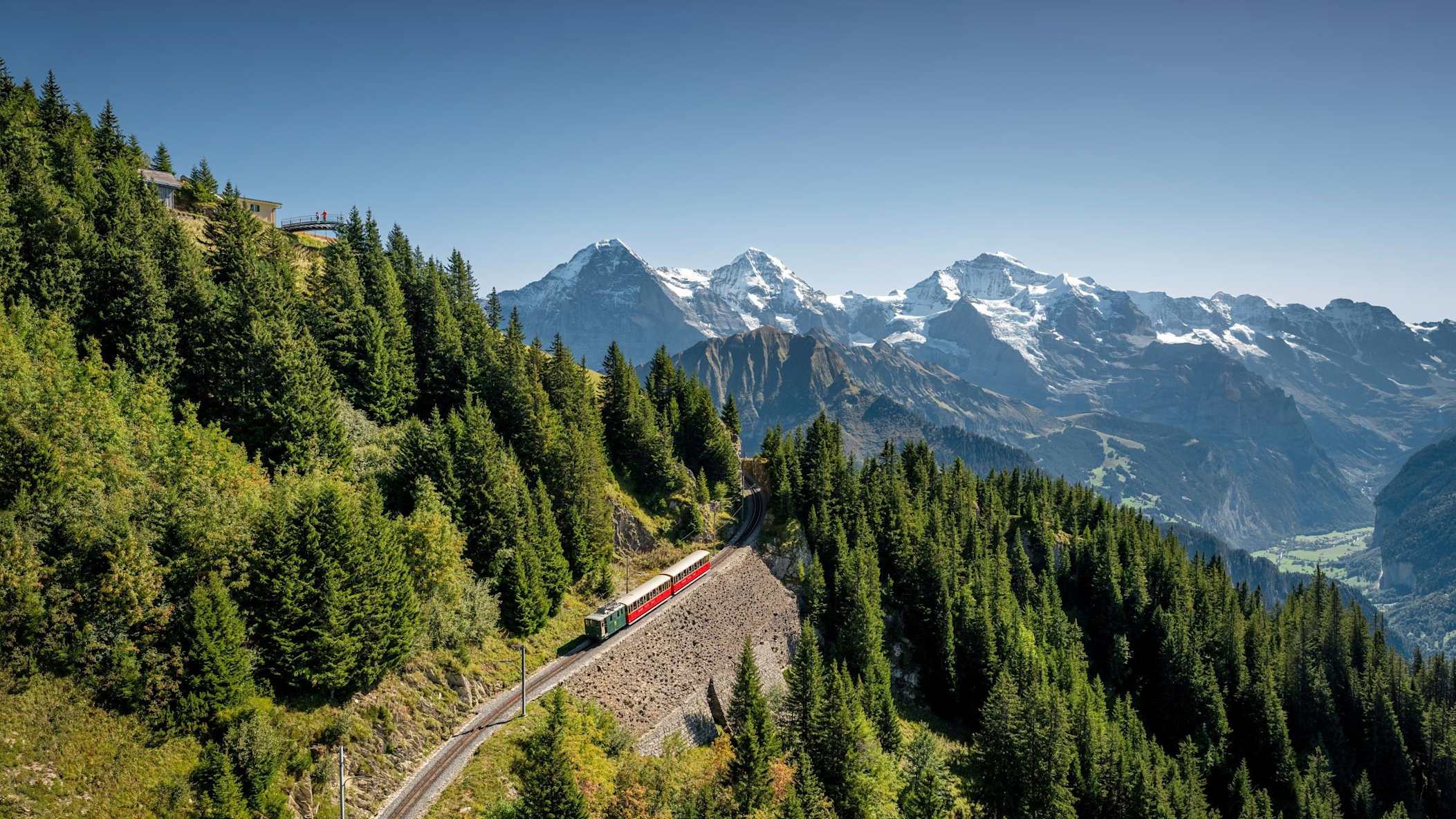
112,000 people travelled on the Schynige Platte Railway (SPB) during the reporting year. That is 2.3 per cent more guests than in 2024. Revenue from passenger services fell by 2.1 per cent to 4.2 million Swiss francs due to a decline in revenue from group travel and season tickets.
In 2025, the Swiss government and the Canton of Bern paid compensation of CHF 11.9 million for regional passenger transport and infrastructure, a decrease of CHF 2 million or 16.8 per cent compared with 2024. Despite lower compensation for the BOB AG, overall sales increased by CHF 1.0 million to CHF 53.7 million.
New rolling stock and urgent renovation work result in a loss
The fact that, despite the encouraging business performance, a loss of 7.3 million Swiss francs was recorded, was due on the one hand to the emergency repair work that had to be carried out at short notice, caused by ground movements along the Bernese Oberland Railway (BOB) route and on the multi-storey car park bridge in Lauterbrunnen and at the Grätli Tunnel on the Schynige Platte Railway line. These incurred costs of 2.9 million Swiss francs and 0.9 million Swiss francs respectively. At the same time, this work demonstrates that the management team and the entire staff are able to address and resolve such unforeseen challenges quickly and effectively.
| Amounts in CHF (1000s) | 2025 | 2024 | Change in CHF (1000s) |
|---|
| Transport revenue, Bernese Oberland Railway | 26,679 | 25,302 | +1,377 |
| Transport revenue, Schynige Platte Railway | 4,183 | 4,271 | -88 |
| Compensation | 11,871 | 13,883 | -2,012 |
| |
| Total operating income | 53,711 | 52,676 | +1,035 |
| Total operating expenses | -45,363 | -38,651 | -6,712 |
| EBITDA | 8,348 | 14,025 | -5,677 |
| Annual result | -7,281 | -691 | -6,590 |
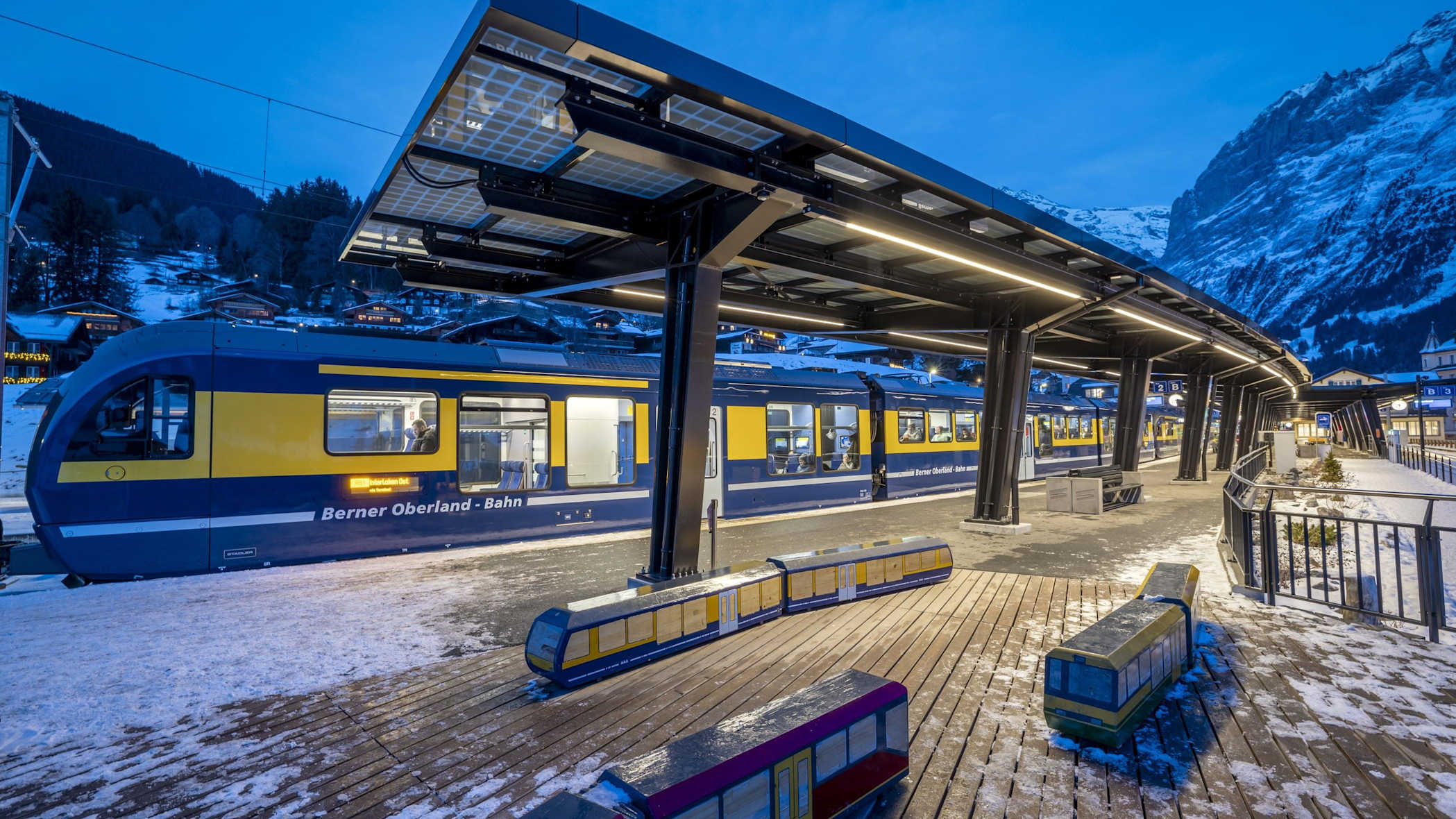
On the other hand, a conscious decision was made not to overhaul five BOB control cars from 2004, but to replace them with five new multiple-unit trains. This decision led to higher depreciation and interest expenses. The five additional multiple-unit trains ordered will be delivered in 2027/2028. The BOB rolling stock fleet will therefore consist exclusively of modern, low-floor-entrance vehicles in future, enabling the current half-hourly service – as well as additional trains on busy days – to be provided to both Lütschin valleys to a high standard.
Despite the annual loss, the Bernese Oberland Railway reports a cost recovery rate of 80.4 per cent in regional passenger transport, a figure that remains very high by Swiss standards. The loss can be covered by existing reserves.
Investments
In 2025, the BOB invested some 49.2 million Swiss francs. Of this amount, 41.8 million Swiss francs was allocated to instalments for the low-floor multiple-unit trains, which are to be delivered between 2025 and 2028.
Sustainability
BOB AG has a special responsibility towards the environment, society, and its stakeholders. To meet these diverse challenges, BOB AG is implementing a comprehensive sustainability strategy. It not only aims to promote sustainable development, but also takes into account the integration of economic success with social and environmental responsibility. Key priorities include biodiversity, responsible corporate governance and corporate culture, and the continued pursuit of the strategic approach of ‘rail rather than road’.
Outlook
The first seven new multiple-unit trains are already in operation, and a further three are due to enter regular service in early summer 2026. The five new multiple-unit trains ordered most recently will be delivered in 2027/2028. The introduction of this new rolling stock has enabled BOB to run additional trains in the direction of peak traffic during high-season periods, such as the winter season that has just ended.
As a result, usage of the Matten Park+Ride facility increased by 92 per cent compared with the previous winter season, thereby significantly reducing the burden of private motorised traffic on the Lütschin valleys.
The consultation period for the project to refurbish the Burglauen railway station, including the level crossing and underpass, is currently under way. The Federal Office of Transport is dealing with the plan approval process (PAP). This project, together with the refurbishment of the Schwendi station – for which the PAP has been available since this spring – is central to the planned expansion to a permanent 15-minute service between Interlaken Ost and Grindelwald.
The Berner Oberland-Bahnen AG annual report 2025 is published via the following link: Berner Oberland-Bahnen AG Annual Report